
Myth‑Busting the Hype: What Autonomy, EVs, and In‑Car Tech Really Do
— 8 min read
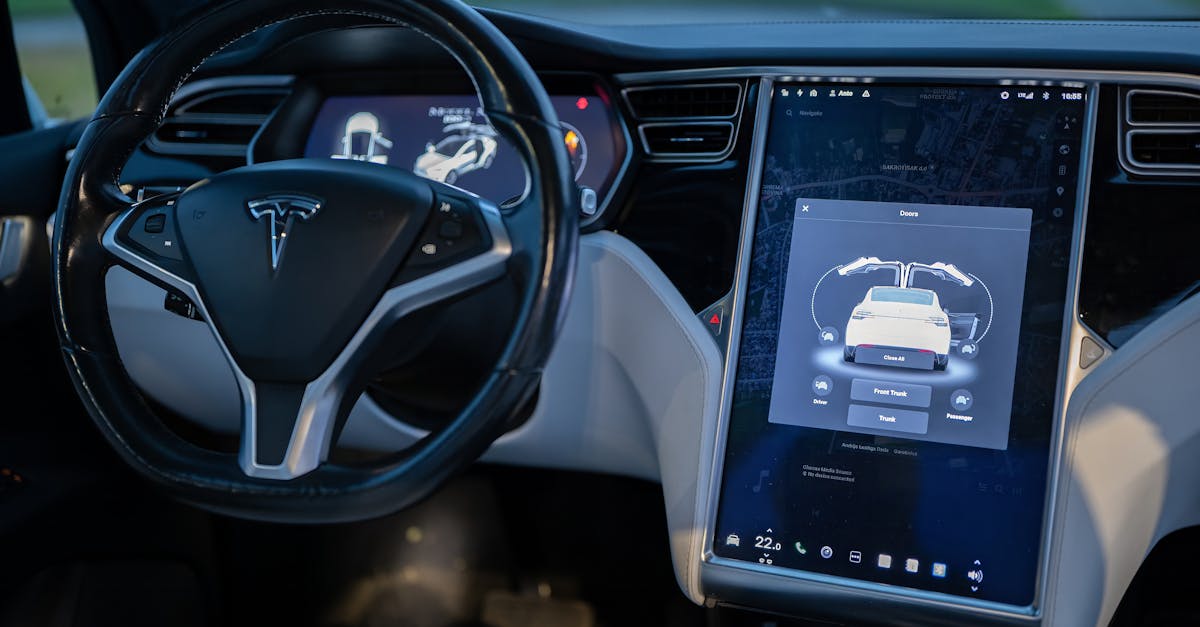
Imagine cruising down a sun-drenched California highway in 2024, the car humming softly as it adjusts speed, hugs the lane, and chats with a traffic-light a mile ahead. The dashboard glows, the driver’s hands are casually on the steering wheel, and a notification pops up: “You’ve reached destination. Please take control.” That moment - half-automation, half-human - captures the paradox at the heart of today’s mobility hype. Let’s pull back the curtain on five persistent myths that keep the public guessing, and replace them with hard-won data, fresh benchmarks, and a few witty analogies.
Myth #1 - Self-Driving Cars Are Already Fully Autonomous
Key Takeaways
- Level 5 autonomy remains a research goal, not a market reality.
- Most production cars operate at Level 2 or Level 3, requiring driver supervision.
- Regulatory frameworks still classify autonomous features as driver-assist, not driver-less.
Today’s “self-driving” cars are not fully autonomous; they still need a human to watch the road and take over within seconds. The Society of Automotive Engineers defines Level 5 as “no driver needed at any time, under any conditions,” and no manufacturer has certified a vehicle at that level for public roads.
Waymo’s latest safety report (2023) shows a disengagement rate of 0.04 per 1,000 miles - meaning the human safety driver had to intervene roughly once every 25,000 miles. By contrast, Tesla’s Autopilot logged 5.5 disengagements per million miles in the same year, a higher frequency that reflects its Level 2 status. Both numbers are tiny compared to the millions of miles driven without any driver input, but they prove the technology still leans on a human safety net.
Regulators in the US, EU, and China treat these systems as driver-assist rather than driver-less. The NHTSA’s 2022 database recorded 4,500 crashes involving Advanced Driver Assistance Systems (ADAS) where driver inattention was a contributing factor. The agency’s guidance explicitly requires the driver to keep hands on the wheel for Level 2 and Level 3 systems.
"Only a handful of pilot programs in Arizona and California allow limited driver-less operation, and even those are confined to geofenced zones with clear weather and low traffic density," says a 2024 report from the International Transport Forum.
In practice, most consumers experience features like adaptive cruise control, lane-keep assist, and traffic-jam assist - all of which can handle simple highway tasks but will alert the driver the moment a complex maneuver appears. The promise of a true robo-taxi fleet remains several years away, pending advances in perception, decision-making, and, crucially, liability frameworks.
So while the dashboard may whisper "autonomy," the reality is more like a well-trained co-pilot who still hands the reins back before the turbulence hits.
Now that we’ve cleared the fog around full autonomy, let’s shift gears and tackle the electrified side of the story: the charging myth that every new EV owner seems to whisper.
Myth #2 - Electric Vehicles Are Plug-and-Play Everywhere
Electric vehicles still face a fragmented charging ecosystem, and range anxiety is far from a relic of the past. While the US now boasts roughly 140,000 public chargers, that translates to about 2,000 chargers per million people - a figure that masks stark regional gaps.
In California, the charger density exceeds 4,500 per million, but in the Midwest many rural counties have fewer than 500. The Department of Energy’s 2024 tracker shows that 68 % of fast-charging stations are located within 50 km of major highways, leaving suburban and inner-city neighborhoods under-served.
Battery capacity also matters. A 2023 AAA survey found that 72 % of drivers still worry about running out of charge on a long trip, even though the average EV range has risen to 260 miles. The same poll revealed that 48 % of respondents would postpone a trip if a charger was not within a 30-minute detour.
Grid constraints add another layer. In Texas, the Electric Reliability Council reported that during the summer of 2023, the state’s electric grid operated at 92 % capacity, limiting the ability to support simultaneous high-power EV charging. Utilities in Europe are responding with time-of-use tariffs; a 2022 study from the German Federal Ministry of Transport showed that 35 % of EV owners shifted charging to off-peak hours to avoid grid stress.
Charging standards further complicate matters. The North American market still juggles CCS, CHAdeMO, and Tesla’s proprietary plug, while Europe is converging on CCS2. A 2024 European Automobile Manufacturers Association report noted that 22 % of public chargers still lack CCS compatibility, forcing drivers to use adapters that add up to 12 % charging loss.
"The average public charger in the US delivers 50 kW, meaning a 75 kWh battery can recharge from 20 % to 80 % in about an hour," says the 2024 BloombergNEF EV Outlook.
Bottom line: EV owners must plan routes, verify charger types, and consider local grid capacity - a far cry from the plug-and-play fantasy often painted in marketing videos.
With the charging maze mapped out, we can now look at the invisible highways that promise cars will talk to everything around them.
Speaking of invisible highways, let’s pull the curtain back on vehicle-to-everything (V2X) and see whether the data-stream really runs forever.
Myth #3 - Car-to-X Connectivity Means Seamless, Unlimited Data
Vehicle-to-everything (V2X) communications are throttled by real-world bandwidth limits, data caps, and privacy rules, not by an endless highway of information.
5G promises latency as low as 10 ms, but coverage remains uneven. The Federal Communications Commission’s 2023 map shows 85 % of the US population lives within 5G range, leaving large swaths of the Midwest and Appalachia on 4G LTE, which adds 50-100 ms latency - enough to affect safety-critical alerts.
Data usage caps also bite. In 2024, the average cellular plan in the US allowed 500 GB of data per month, and a connected car can consume up to 2 GB per week for map updates, OTA software patches, and telemetry. A 2022 study from the University of Michigan calculated that a fleet of 1 million connected cars could generate 1.04 petabytes of data per day, overwhelming many carriers’ back-haul capacity.
Privacy regulations further restrict data flow. The European Union’s GDPR requires explicit consent for location tracking, and California’s CCPA imposes strict opt-out rules for personal data. Automakers now embed data-minimization algorithms that strip identifiers before transmission, which can reduce the richness of V2X messages.
Reliability is another hidden factor. In a 2023 field test of V2X in Detroit, packet loss reached 12 % during peak rush-hour traffic, causing delayed cooperative adaptive cruise control (CACC) responses. The same study noted that weather conditions - heavy rain or snow - attenuated the 5.9 GHz DSRC signal by up to 30 %.
"Only 42 % of new vehicles sold in 2023 supported full V2X stacks, and of those, just half were enabled with a subscription that covered data costs," reports a McKinsey Mobility Insights paper.
Thus, while V2X holds promise for smoother traffic flow and collision avoidance, it is bounded by network reach, subscription economics, and legal safeguards - not the limitless data stream imagined by early hype.
Next, we’ll see why those shiny driver-assist features don’t make you invincible on the road.
Even with the best data pipelines, a system is only as safe as the human behind the wheel. Let’s examine the safety myth that ADAS can turn every car into a crash-proof bubble.
Myth #4 - Driver-Assistance Systems Make Accidents Impossible
Advanced driver-assist systems (ADAS) reduce certain crash types but also create new failure modes and a false sense of security.
The National Highway Traffic Safety Administration’s 2022 analysis of 2.2 million crashes involving ADAS found a 30 % reduction in rear-end collisions, yet lane-departure incidents rose by 15 % when drivers relied too heavily on lane-keep assist. The study linked the increase to “automation complacency,” where drivers disengage their hands for longer periods.
Specific systems illustrate the trade-off. Tesla’s Autopilot, classified as Level 2, logged 0.02 fatalities per million miles in 2023, compared with 0.04 for human-only driving. However, a 2024 NHTSA investigation uncovered 12 cases where the system failed to recognize stationary objects after a sudden rainstorm, leading to low-speed collisions.
Blind-spot monitoring (BSM) shows similar nuance. A 2023 JAMA study of 1,500 drivers reported that BSM alerts reduced side-impact crashes by 23 %, but 18 % of drivers admitted they ignored the warning when they believed they could see the adjacent lane, resulting in “alert fatigue.”
Hardware limitations matter too. Most ADAS rely on a combination of radar (operating at 77 GHz) and cameras with a field of view of 120 degrees. In heavy snow, radar returns can be cluttered, and camera lenses can become obscured, degrading performance. A 2022 winter test in Sweden showed a 27 % drop in forward-collision-avoidance activation under blizzard conditions.
"The average time to driver takeover after an ADAS disengagement is 1.8 seconds, well beyond the 0.5-second reaction window needed to avoid a collision at 70 mph," notes a 2023 MIT Mobility Lab paper.
Consequently, while ADAS are valuable safety aids, they are not a guarantee against accidents. Proper driver engagement and awareness remain essential components of any safety strategy.
Now that we’ve grounded the safety conversation, it’s time to explore the infotainment myth that a car’s screen is just a glorified smartphone.
From safety to entertainment, the final myth ties everything together - are we really just putting bigger phones on wheels?
Myth #5 - In-Car Infotainment Is Just a Bigger Smartphone
Modern infotainment platforms combine automotive-grade hardware, proprietary OS layers, and safety-critical integration that go far beyond a tablet on the dash.
Hardware differences are stark. While a typical smartphone uses a Snapdragon 8-Gen 3 chip, many new vehicles ship with Qualcomm Snapdragon Automotive 5G platforms that support dual-lane CAN bus, Ethernet, and multiple display outputs. These chips are rated for automotive temperature ranges (-40 °C to 125 °C) and undergo MIL-STD-810G vibration testing - standards far beyond consumer phones.
Software stacks are equally specialized. Google’s Android Automotive OS, used by Volvo and Polestar, runs a separate process space for navigation, climate control, and vehicle diagnostics, isolated from third-party apps to meet ISO 26262 functional safety requirements. In contrast, Apple CarPlay mirrors the iPhone’s UI and cannot directly control vehicle functions.
Over-the-air (OTA) updates illustrate the depth of integration. A 2023 GM report showed that 80 % of new vehicles received at least one OTA update in their first year, ranging from battery-management tweaks to new driver-assist algorithms. These updates are signed with hardware-bound keys and validated against a secure boot chain, a security model not present on consumer smartphones.
Data handling also diverges. Infotainment systems process telematics, driver-behavior analytics, and V2X data, all of which are subject to automotive-specific encryption (e.g., TLS-1.3 with hardware-based key storage). A 2022 KPMG study estimated that automotive OTA traffic accounts for 12 % of total automotive data volume, surpassing in-vehicle entertainment streaming.
"By 2025, 65 % of new cars will feature a dedicated infotainment processor separate from the central vehicle computer," predicts a Deloitte Mobility Outlook.
In short, while the user interface may feel familiar, the underlying ecosystem is purpose-built for durability, safety, and regulatory compliance - a far cry from simply scaling up a smartphone.
Q: Are any cars truly Level 5 autonomous today?
A: No. All production vehicles on the market operate at Level 2 or Level 3, meaning a human driver must remain engaged and ready to take control.
Q: How many public EV chargers are there in the United States?
A: As of 2024, there are roughly 140,000 public chargers nationwide, equating to about 2,000 chargers per million residents.
Q: Does 5G coverage guarantee reliable V2X communication?
A: No. While 5G reduces latency, coverage gaps, data caps, and weather-related signal loss can still impair V2X performance.
Q: Can driver-assist systems eliminate all crashes?
A: No. ADAS reduces certain crash types but can introduce new risks such as driver complacency and sensor failure in adverse conditions.
Q: Are car infotainment systems just upgraded smartphones?
A: Not at all. They use automotive-grade processors, safety-focused OS

