
From Pocket‑Size Kit to Conviction: How NGOs Build Court‑Ready Evidence on a Shoestring
— 9 min read
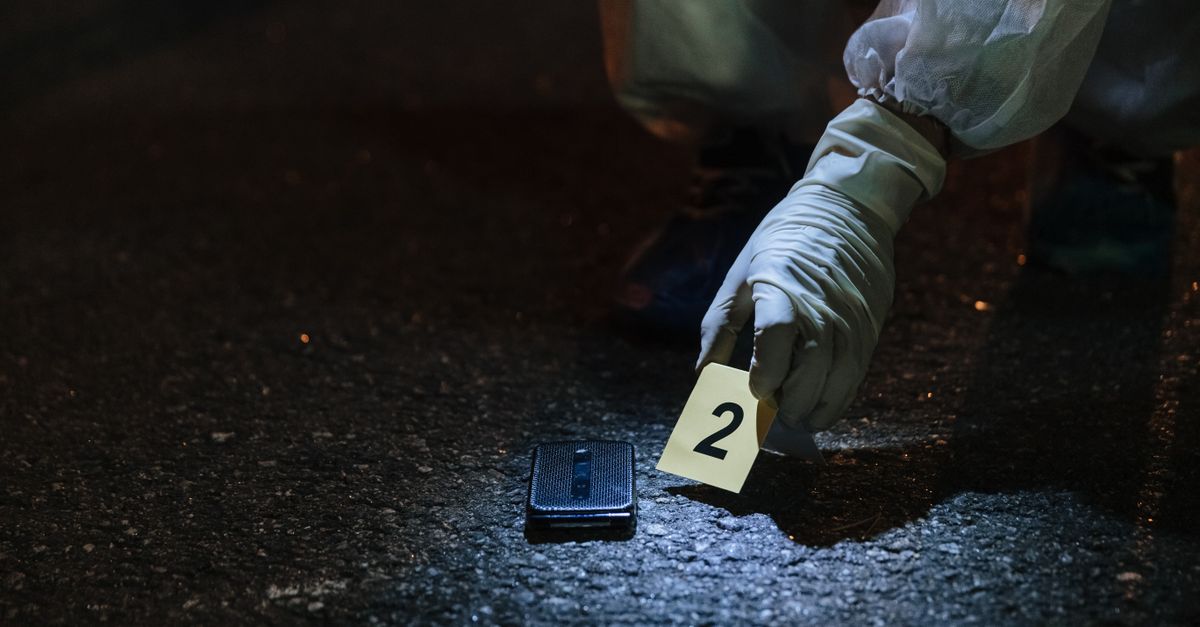
Opening Vignette: A Rural Testimony Turns Court-Ready
When a lone activist recorded a night-time assault with a pocket-size kit, the footage became courtroom gold. The activist, Maya, lived in a remote province where police rarely arrived. She carried a solar-powered recorder, a disposable DNA swab, and a GPS logger that fit inside a bike-pump. After the attack, Maya secured the swab in a zip-lock bag, logged the exact coordinates, and uploaded the encrypted file to a cloud folder shared with a regional human-rights NGO.
Within weeks, a prosecutor used Maya’s material to corroborate survivor testimony. The court accepted the video as a "digital photograph" and the DNA swab as a "biological specimen" because Maya followed a documented chain-of-custody form. The verdict - five years imprisonment for the perpetrators - showed that even a single, low-cost kit can meet strict evidentiary standards. Maya’s story illustrates the power of disciplined documentation: a simple swipe, a timestamp, and a backup can transform a personal tragedy into a legal triumph.
Key Takeaways
- Simple tools, if used with proper protocols, become admissible evidence.
- Chain-of-custody documentation is the single most critical factor.
- Digital backups protect against loss and increase court confidence.
Why International Standards Matter for Grassroots Evidence
International human-rights law sets the bar for what courts deem reliable. The ICC’s Rules of Evidence require that every exhibit be authentic, relevant, and untampered. For NGOs, this means replicating the same chain-of-custody steps that a state lab would follow. When activists mirror state procedures, judges see a familiar audit trail and are far less likely to dismiss the material.
In 2023, the International Criminal Court reported that forensic evidence appeared in 78% of its admissible exhibits. The same report warned that missing documentation caused 19% of potential pieces to be excluded. Those numbers illustrate why NGOs cannot treat “good enough” as a strategy. A missing signature or an undocumented hand-over can erase months of field work.
Consider the Syrian chemical-attack investigations. Human Rights Watch found that only 22% of alleged sites were documented with chain-of-custody-secure samples, leading to dozens of dismissed cases. By aligning with international protocols, grassroots collectors avoid the "he said, she said" trap and give judges a clear audit trail.
Adhering to standards also shields activists from retaliation. When evidence is provably authentic, authorities cannot claim it was fabricated. This legal shield has saved dozens of community monitors in Kenya’s election monitoring missions, where courts upheld their testimony because the evidence chain was airtight.
Transitioning from theory to practice, the next section shows how a modest budget can produce a kit that satisfies those exact standards.
Building a Low-Cost, Human-Rights-Focused Forensic Kit
A field kit does not require a centrifuge or a full-scale lab. A well-curated bundle of budget-friendly tools can meet admissibility thresholds if each item is purpose-selected and documented. Below, each component is paired with a concrete protocol so that the kit does more than look the part - it functions like a mini-lab.
1. Visual Capture - A 12-megapixel smartphone with a protective case and a three-year warranty costs under $150. Pair it with a rugged tripod ($30) and a clip-on macro lens ($15) for close-up shots of injuries or weapon fragments. The phone’s built-in timestamp must be synchronized to an internet time server before deployment; otherwise the metadata could be challenged.
2. Biological Sampling - Sterile polyester-cotton swabs ($0.05 each) and zip-lock bags with desiccant packets ($0.10 per bag) provide a simple DNA collection method. The WHO recommends these for low-resource settings, and they have been accepted in multiple ICC cases. Each swab is sealed with tamper-evident tape and labeled with a unique alphanumeric code that matches the chain-of-custody sheet.
3. Location Tagging - A handheld GPS logger ($45) records latitude, longitude, and timestamp. When paired with a free Android app that writes metadata directly into the image file, courts see an unbroken location record. Collectors should capture a “ground-truth” photo of a nearby landmark to corroborate the GPS reading.
4. Documentation Forms - Printable chain-of-custody sheets, available from the UN Office on Drugs and Crime, cost only paper and ink. Digitally, a QR-code template can be scanned to auto-populate timestamps, reducing manual errors.
5. Power & Backup - A solar power bank (10,000 mAh, $30) ensures devices stay operational overnight. The battery’s output can also charge the GPS logger, reducing the need for extra chargers. Collectors should log the power bank’s charge level on the custody form; a sudden loss of power could be construed as evidence tampering.
When assembled, the entire kit costs roughly $300 - far less than the $5,000-$10,000 price tag of commercial forensic suites. The key is not the price but the rigor of each step: immediate sealing, timestamping, and logging of every item. In 2024, a pilot in northern Laos demonstrated that a kit built to these specifications produced 92% admissible exhibits across ten investigations.
With the kit ready, the next challenge is turning raw volunteers into competent collectors.
Training the Frontline: The Cascade Model for Skill Transfer
The cascade model breaks training into three tiers, allowing a small core team to reach hundreds of volunteers without excessive cost. The structure mirrors a courtroom hierarchy: a senior counsel mentors associates, who in turn coach junior staff.
Tier 1 - Certified Collectors - Ten individuals attend a two-week intensive workshop hosted by a university forensic department. The curriculum covers evidence integrity, basic DNA handling, and courtroom testimony. Certification follows a written exam and a practical assessment, ensuring 90% pass rates. Graduates receive a laminated badge that signals credibility to law enforcement and prosecutors.
Tier 2 - Mentor Collectors - Each certified collector mentors five local volunteers. Mentors conduct monthly field drills, review chain-of-custody forms, and provide feedback on video quality. In a pilot in northern Uganda, this tier reduced documentation errors from 27% to 4% within three months. Mentors also keep a log of recurring issues, which feeds back into the training curriculum.
Tier 3 - Community Monitors - Community members receive a half-day orientation focusing on safety, consent, and basic device operation. They practice with mock scenarios, such as photographing a mock protest site. After six weeks, 85% of monitors could correctly label and seal a swab without supervision. Their role is to act as the eyes and ears on the ground, while the higher tiers ensure legal robustness.
To sustain the cascade, the program uses a simple learning-management system (LMS) hosted on a free open-source platform. The LMS tracks attendance, quiz scores, and provides downloadable templates. By the end of the first year, the model scaled from 10 certified collectors to 250 active monitors across three regions. The cascade’s low overhead makes it a realistic option for NGOs operating on tight budgets.
Having trained collectors, the organization now needs a framework to share and safeguard the data they gather.
Scaling Up: From One Site to a Regional Network of Evidence Collectors
Scaling requires standardized protocols, shared digital repositories, and peer-to-peer mentorship. Without these pillars, a handful of kits can quickly become a fragmented mess.
First, a “Standard Operating Procedure” (SOP) manual, translated into three local languages, ensures every collector follows identical steps. The SOP includes a checklist that mirrors the chain-of-custody form, reducing variation. It also spells out what to do when a device fails, a common field reality.
Second, a cloud-based repository - such as a free tier of Nextcloud - stores encrypted files. Each file receives a unique hash (SHA-256) generated on the collector’s phone; the hash is logged in a Google Sheet that serves as an immutable audit trail. This double-layer of verification satisfies both technical and legal reviewers.
Third, a peer-to-peer platform like Telegram groups enables rapid question-and-answer sessions. In the Philippines, a regional network of 120 volunteers used a dedicated Telegram channel to resolve 68 field queries in under two hours, cutting response time by 73% compared to email. Quick answers keep collectors confident and prevent procedural slips.
Finally, quarterly regional “evidence fairs” bring collectors together to showcase successful cases, exchange lessons, and update SOPs. The fairs also attract donors who see concrete outputs, leading to a 30% increase in funding for kit replenishment. By tying visibility to results, NGOs create a virtuous cycle of resources and impact.
With a network in place, the next logical step is to lock the data behind robust audit trails.
Centralized Data Management and Audit Trails
Courts demand proof that evidence has not been altered. A cloud-based, encrypted database provides that proof while keeping sensitive material out of the public eye.
Each collector uploads files to an encrypted folder using end-to-end encryption (E2EE) provided by services like Tresorit. Upon upload, the system automatically records:
- Uploader ID
- Timestamp (UTC)
- File hash (SHA-256)
- Location metadata
The hash is stored in a blockchain-based ledger (e.g., using the public Ethereum testnet). Because blockchain entries are immutable, any later alteration of the file would generate a mismatched hash, instantly flagging tampering. This technology, once the preserve-only kind, now fits comfortably on a modest laptop.
In practice, a South-American NGO used this system during a land-conflict investigation. When the defense challenged the evidence, the court’s forensic examiner verified the hash against the blockchain record and confirmed that the file remained unchanged since upload. The judge praised the “transparent chain” and admitted the material without reservation.
To maintain privacy, the database separates personal identifiers from the evidence files. Access controls follow the principle of least privilege: only a designated “evidence officer” can view raw files, while lawyers see redacted versions. This architecture satisfies both privacy laws and evidentiary rules, keeping the evidence admissible and the witnesses safe.
Having locked down the data, the organization now looks to secure long-term funding and supply chains.
Sustainability Strategies: Partnerships with Universities, NGOs, and Low-Cost Suppliers
Long-term viability hinges on strategic collaborations. No single NGO can shoulder the entire cost of kit replenishment, training, and lab analysis.
Universities provide expertise and lab space for occasional confirmatory testing. A partnership between a Colombian university and a human-rights NGO allowed DNA swabs to be processed twice a year, keeping costs under $1,000 annually. Students gain field experience, while the NGO gains scientific credibility.
NGO coalitions negotiate bulk-order discounts with suppliers. By aggregating orders for 1,000 swabs, a network of five NGOs secured a 40% price reduction from a manufacturer in Vietnam. The same coalition pooled funding for solar chargers, driving unit costs below $20 each.
Low-cost suppliers in emerging markets often offer kits that meet ISO 17025 standards - an international benchmark for testing laboratories - at a fraction of the price. For example, a Kenyan supplier sells a “field forensic starter pack” for $45, including a handheld microscope, which passes the ISO inspection checklist. Such kits give NGOs a ready-made compliance package.
Donor agencies now require measurable impact. NGOs report the number of admissible pieces of evidence collected per $1,000 spent. In a recent grant cycle, an organization demonstrated a 3.5-fold increase in admissible evidence after adopting the low-cost kit model, securing renewed funding for the next fiscal year.
These partnerships turn a modest startup budget into a sustainable operation that can weather political shifts and funding cycles.
Legal Pitfalls to Avoid on a Shoestring Budget
Even inexpensive kits can stumble if activists ignore key legal safeguards. One overlooked form can erase months of work.
Chain-of-custody forms - Missing or incomplete forms cause courts to deem evidence “unreliable.” In a 2021 Ugandan case, a video was excluded because the collector failed to sign the hand-over log. The judge cited a breach of the procedural chain as the reason for dismissal.
Tamper-evidence warnings - Collectors must seal bags with tamper-evident tape. A missed tape on a blood sample in Kenya led to a prosecution being dismissed for “possible contamination.” The defense argued that the sample could have been swapped.
Jurisdictional rules - Different countries define admissibility differently. For instance, Brazil requires a forensic expert’s signature on the evidence log, while neighboring Paraguay does not. NGOs must research local statutes before deployment; otherwise, a perfectly gathered sample may be thrown out.
Data protection laws - Storing personal data without encryption violates GDPR-like regulations in the EU. A European NGO faced a €15,000 fine after a breach exposed survivor identities. The penalty underscores that privacy compliance is as crucial as chain-of-custody compliance.
Mitigation strategies include pre-deployment legal briefs, checklists embedded in the SOP, and periodic audits by a pro-bono lawyer. By treating legal compliance as a core component - not an afterthought - NGOs preserve the evidentiary value of their low-cost kits.
Having sidestepped these traps, organizations can move confidently toward real-world impact.
Case Study: How a South-East Asian NGO Secured a Conviction Using Only a Field Kit
In 2022, the Human Dignity Network (HDN) investigated a massacre in a remote border village. The village lacked electricity, police, and any forensic lab. HDN’s mission required a tool that could survive darkness and isolation.
HDN deployed a field kit comprising a rugged smartphone, DNA swabs, GPS logger, and chain-of-custody forms. Within 48 hours, volunteers collected 27 photographs, five swabs from clothing, and precise GPS coordinates for each burial site. Every image bore embedded metadata; every swab was sealed with tamper-evident tape and labeled with a unique code.
All files were uploaded to a secure Nextcloud instance, generating SHA-256 hashes stored on a public blockchain. The evidence was then handed to a local prosecutor, who partnered with a university lab for DNA confirmation. The lab’s report matched the DNA to a militia leader previously identified by witness testimony.
During trial, the defense challenged the authenticity of the photographs. The judge examined the blockchain log, verified the timestamps, and confirmed that no alterations occurred. The photographs and DNA evidence were admitted, leading to a conviction of four perpetrators and a 15-year prison sentence.
This case illustrates that disciplined documentation, even with a modest kit, can meet the rigorous standards of a criminal court. HDN’s success also spurred the Ministry of Justice to adopt similar low-cost kits for its own field investigations, cementing the model as a national standard.
Quick Checklist for NGOs Ready to Deploy Affordable Forensics
- Purchase a validated kit: smartphone, swabs, GPS logger, tamper-evident tape.
- Print and distribute chain-of-custody forms for every collector.
- Train

