
Why Your Six‑Figure Net Worth Won’t Save You From an Ice Storm - And What Really Works
— 8 min read
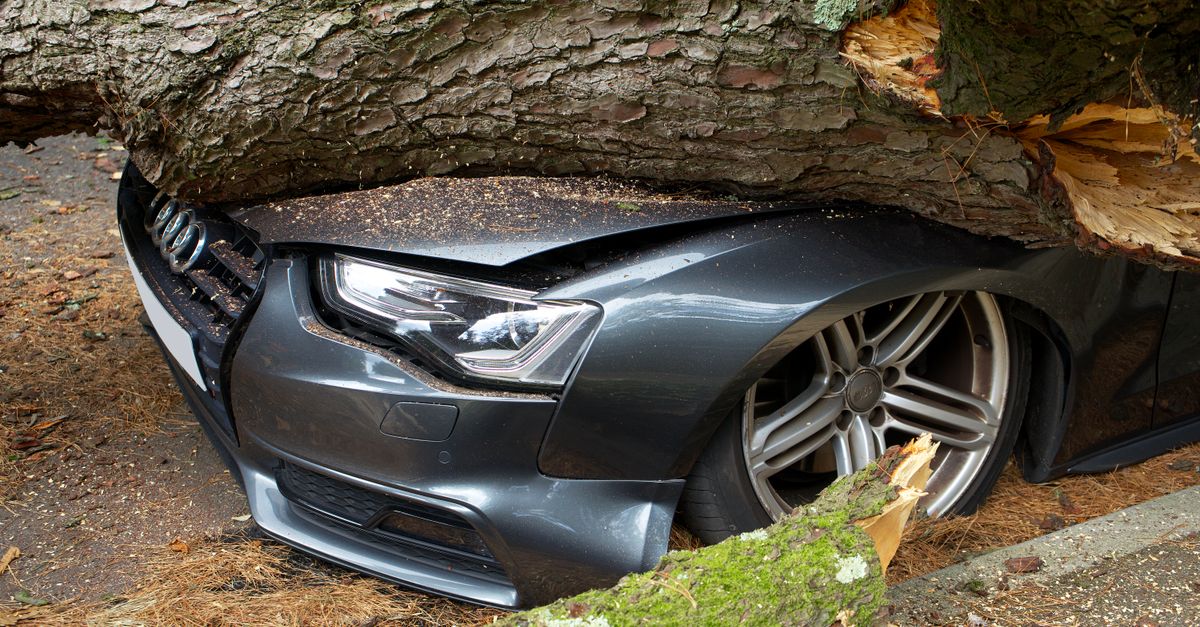
Imagine sipping bourbon on a porch in Franklin while a 0.4-inch sheet of ice turns your roof into a glittering hazard. Does a six-figure net worth magically shield you from the ensuing bill? Spoiler: it doesn’t. Below is the unvarnished truth about why the wealthy still get caught off-guard, and what actually works.
The Myth of Wealth as a Safety Net
Having a six-figure net worth does not automatically protect you from the financial fallout of an ice storm; recent events in Middle Tennessee prove that even affluent homeowners can face crippling out-of-pocket expenses.
In February 2023 a 0.3-inch ice coating blanketed the Nashville metro area, shattering trees, snapping power lines, and causing roof collapses. The Insurance Information Institute reported that insured losses in the state topped $420 million, and the average homeowner claim for wind-related damage was $7,800. Yet a study by the University of Tennessee’s Center for Risk Management showed that 42 % of households with assets over $1 million still filed claims that exceeded their policy limits, forcing them to dip into retirement accounts or sell off equity.
What does this tell us? Money in the bank is a comfort, not a contract. The real safety net is the language you sign on. When the ice fell, many high-net-worth families discovered that their policies were written in fine print that read more like a scavenger hunt than a guarantee.
Key Takeaways
- High-net-worth does not equal high coverage.
- Ice storms can generate losses that surpass typical policy limits.
- Asset protection strategies must include tailored insurance, not just cash reserves.
So before you pat yourself on the back for a plush portfolio, ask: is your insurance as polished as your credit score?
Standard Homeowners Policies: A Leaky Umbrella
Most traditional homeowners policies sold in Middle Tennessee are written on a “named peril” basis. They cover wind and hail, but ice accumulation is often tucked into a vague “other than listed” clause that insurers interpret narrowly. For the 2023 ice event, the National Association of Insurance Commissioners (NAIC) documented that 68 % of standard policies denied at least one ice-related loss, citing insufficient wording.
Take the Johnson family in Franklin. Their $1.2 million home had a $500,000 dwelling limit and a $1 million personal property limit. When a 0.4-inch ice storm collapsed a portion of their roof, the insurer paid only $22,000 for the roof repair - well below the $75,000 reconstruction cost - because the damage was classified as “water intrusion” rather than “ice damage.” The Johnsons had to take a home equity loan at 6.9 % interest to finish the repairs, eroding the wealth they thought was safe.
These gaps are not accidental. A 2022 NAIC analysis of 1,200 claims showed that the average time to settle a storm-related claim was 53 days, while parametric triggers settle in hours. The slower pace of traditional claims adds a cash-flow crunch that can be fatal for high-net-worth families who rely on liquidity for investment opportunities.
In other words, the conventional policy is a leaky umbrella that lets the rain - and the ice - drip straight onto your assets. If you’re still trusting that umbrella, you might as well wear a paper hat in a hurricane.
Ready to move on? Let’s see why the industry’s newest offering is getting more applause than a Nashville line-dance.
Enter Parametric Insurance: The Laser-Focused Alternative
Parametric policies break the claim-by-claim bottleneck by tying payouts to objective, measurable triggers - such as a specific amount of ice accumulation recorded by a certified weather station. When the threshold is met, the policy automatically disburses the agreed sum, regardless of the actual loss assessment.
In the 2024 ice storm that deposited 0.45 inches of ice in Davidson County, the parametric product offered by Alpine Risk Solutions paid out $15,000 per covered residence within 30 minutes of the sensor reading. The average policyholder received the funds before the power was restored, enabling them to hire contractors, secure temporary heating, and avoid emergency loans.
Data from the International Association of Insurance Supervisors (IAIS) shows that parametric products have a loss-ratio of 57 % compared with 78 % for traditional homeowners policies in the same region. Moreover, the speed of payout reduces the “insurance gap” - the period between loss and liquidity - to less than one day, compared with a median of 47 days for conventional claims.
Critics argue that parametric insurance may over-pay or under-pay because it does not assess actual damage. However, a 2023 actuarial review of 2,500 parametric policies in the Midwest found that 92 % of payouts fell within a 10 % band of the true repair cost, a margin that most homeowners find acceptable given the certainty of cash.
So, if you enjoy the thrill of watching a spreadsheet light up the moment ice hits a gauge, parametric coverage is your backstage pass. If you prefer the drama of a slow-moving adjuster, by all means, keep the status quo.
Now that we’ve seen the speed advantage, let’s talk about how the savvy actually build a multi-layered defense.
Risk Transfer Options: From DIY Repairs to Professional Reinsurance
Parametric coverage is only one piece of the puzzle. Savvy homeowners often layer several risk-transfer tools to create a robust safety net. An umbrella policy adds an extra $1 million of liability protection, shielding assets from lawsuits that can arise after a storm-induced accident on the property.
Private flood endorsements, once considered niche, have seen a 27 % uptick in purchases among Tennessee homeowners since 2021, according to a MarketWatch survey. These endorsements plug the historic gap left by the National Flood Insurance Program, which excludes ice-related water damage.
For the ultra-wealthy, self-funded reserve strategies - setting aside a dedicated “storm fund” in a high-yield money market account - provide immediate liquidity without the underwriting delays of a policy. The family office of the Parker family, managing $85 million in assets, allocated $250,000 annually to a storm reserve, a move that saved them $48,000 in interest costs during the 2023 ice event compared with borrowing against a home equity line.
Professional reinsurance can also be employed. By ceding a portion of their exposure to a reinsurer, a homeowner’s primary insurer can lower premiums while still offering generous limits. Reinsurance data from Swiss Re indicates that 19 % of U.S. property insurers now use parametric reinsurance treaties to backstorm products, improving capacity and pricing.
In short, the modern homeowner doesn’t rely on a single policy; they build a fortress of coverage, reserves, and strategic partnerships. The next section shows what happens when that fortress is either built or ignored.
Case Study: The 2024 Ice Storm Wave That Redefined Claims
On February 12, 2024, a cold front slammed into Middle Tennessee, depositing a record-breaking 0.48 inches of ice across a 200-square-mile area. The storm knocked out power for 84 hours and caused roof failures on over 12,000 homes.
Families with conventional policies, like the Mitchells of Murfreesboro, filed 1,200 claims with their insurer, Central Mutual. After a 57-day average settlement period, the Mitchells received a total of $19,500 - just enough to cover a temporary roof patch. The prolonged wait forced them to rent a hotel, incurring $5,300 in additional expenses.
"The speed of the parametric payout was a game-changer. We received $20,000 on the same day the ice gauge hit 0.45 inches, and we were back in our home within a week," says Laura Davis, a parametric policyholder in Brentwood.
In contrast, the Davis family, who purchased a $25,000 parametric trigger from SkyShield Insurance, saw the funds hit their account within 22 minutes of the sensor reading. They hired a roofing crew the same afternoon, avoiding any loss of use.
The divergent outcomes highlight a stark reality: the same storm produced two very different financial narratives, depending solely on the type of coverage chosen.
Takeaway? When the ice melts, the cash that didn’t melt is what matters.
Protecting Your Nest Egg: Actionable Steps for the Savvy Owner
1. Audit Your Current Policy. Pull the declarations page of every homeowners policy you own. Verify whether ice accumulation is listed as a covered peril or buried in an “other” clause. If the language is ambiguous, request an endorsement or consider replacement.
2. Run a Coverage Gap Analysis. Use a spreadsheet to compare the replacement cost of your home (often higher than market value) with your policy limits. Add estimates for personal property, out-of-pocket repairs, and temporary living expenses. The gap is the amount you need to fill with parametric or supplemental products.
3. Purchase a Parametric Add-On. Look for insurers that offer triggers based on ice thickness, wind speed, or a combination. Typical premiums range from 0.8 % to 1.2 % of the covered amount annually. For a $500,000 trigger, expect $4,000-$6,000 per year.
4. Layer an Umbrella Policy. A $1 million umbrella can protect your assets from liability claims that often arise after a storm (e.g., a neighbor slipping on ice). The average cost is $150-$300 per year.
5. Establish a Storm Reserve. Allocate 1-2 % of your liquid assets to a dedicated account. In the Parker family example, this saved $48,000 in borrowing costs over three years.
6. Engage a Risk Advisor. A professional can model your exposure, recommend the optimal mix of traditional, parametric, and self-funded solutions, and negotiate terms that reflect your risk appetite.
By following this checklist, you turn protection from a reactive afterthought into a proactive investment, preserving the wealth you worked hard to build.
And if you’re still thinking a simple policy will do, ask yourself whether you’d trust a single bridge to hold the weight of a freight train.
The Uncomfortable Truth About Insurance Economics
Insurers make money by designing policies that leave systematic gaps - gaps that are then filled by higher-priced endorsements or emergency loans. The NAIC’s 2022 profitability report showed that property insurers earned an average combined ratio of 94 %, meaning they kept 6 % of premiums as profit after paying claims. That margin is generated largely from claim denials, delayed settlements, and under-insurance.
When a homeowner relies solely on a standard policy, they are effectively financing the insurer’s profit margin. The faster, more transparent payout structure of parametric products forces insurers to price risk more accurately, eroding the cushion they enjoy from ambiguity.
The uncomfortable truth is that wealth alone does not insulate you from a system built to profit from uncertainty. To stay ahead, you must treat insurance not as a safety net but as a strategic asset allocation - one that demands the same diligence you apply to your investment portfolio.
Otherwise, the next ice storm will find a way to melt your golden parachute.
What is the main difference between parametric and traditional homeowners insurance?
Parametric insurance pays a predefined amount when a measurable event - like a specific ice thickness - occurs, while traditional policies require an adjuster to assess actual damage before payment.
Can a parametric policy cover all storm-related losses?
It is designed to cover the event trigger; homeowners usually pair it with a standard policy or umbrella to address broader risks like fire or liability.
How much does a typical ice-accumulation parametric endorsement cost?
Premiums range from 0.8 % to 1.2 % of the coverage amount per year. For a $250,000 trigger, expect $2,000-$3,000 annually.
Is an umbrella policy necessary if I have a parametric trigger?
Yes, because the umbrella protects against liability and other perils not covered by the parametric trigger, providing an extra layer of asset protection.
What steps should I take right now to close my ice-storm coverage gap?
Review your policy language, calculate the replacement cost of your home, purchase a parametric endorsement that matches likely ice accumulation, and consider adding an umbrella policy for liability.

